Source ISO Certified Transit Ambulance for Emergency Transport
Find 30 iso certified transit ambulance models with diesel engines and manual transmissions. Compare specifications like horsepower, wheelbase, and medical equipment options for emergency patient transport and viral infection cases; compare the available evidence and request quotations based on your requirements.
Key considerations
Products List




Comprehensive Sourcing Guide
ISO Certified Transit Ambulance Sourcing Guide
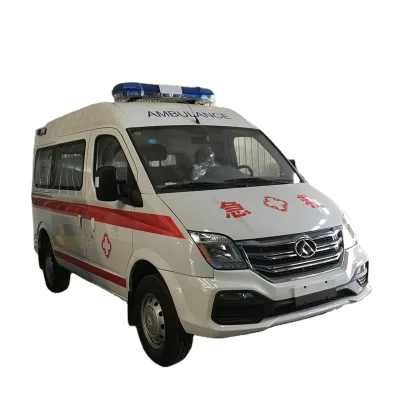
Procuring an ISO certified transit ambulance requires a rigorous evaluation of vehicles designed specifically for transporting injured, sick, or viral infection patients. The observed market listings indicate a focus on transit-type monitoring designs with rational structures and nice shapes, ensuring both operational efficiency and patient comfort during transport. Buyers must prioritize units that explicitly state "With Medical Equipment" to guarantee readiness for immediate deployment in emergency scenarios.
The available inventory highlights a diverse range of models, including the AM001, MT5050, and CLW series, originating from manufacturing hubs in Hubei and Suizhou, China. These units typically feature diesel or gasoline engines with horsepower ratings spanning from 100 to 210 hp, catering to varying load and speed requirements. Sourcing strategies should focus on verifying the specific model number against the intended operational environment to ensure the vehicle meets the necessary performance thresholds for emergency medical services.
Product Scope and Observed Listing Signals
Buyers should analyze the observed price range of 10,000 to 190,000 USD to understand the cost variance associated with different equipment configurations and engine capacities. Listings often specify a minimum order quantity of one unit, allowing for flexible procurement strategies whether for a single fleet addition or a larger municipal deployment. The presence of customization options for logos and specific medical setups suggests that suppliers are prepared to tailor vehicles to distinct organizational branding and operational protocols.
The product scope encompasses various transmission types, predominantly manual, and single-axle configurations with wheelbases ranging from 3300 to 3350 mm. Dimensions vary significantly, with standard lengths observed between 3 and 8 meters and widths often around 1.9 to 2.0 meters. When evaluating listings, procurement teams must distinguish between units equipped with medical gear and those listed as "Without Medical Equipment" to avoid purchasing chassis-only vehicles that require additional retrofitting before clinical use.
Technical Specifications to Verify
Verification of engine displacement and total mass is critical for ensuring the vehicle can handle the required load without compromising safety or fuel efficiency. Observed specifications include a 2.0 T displacement and total masses ranging from 3300 kg to 3550 kg, which directly impact the vehicle's ability to navigate urban environments while carrying heavy medical loads. Buyers must confirm that the suspension system, often described as Macpherson independent suspension, aligns with the need for a smooth ride to prevent further injury to patients during transit.
Dimensional accuracy is another vital technical parameter, with observed standards listing lengths and widths such as 5400x1690x2400 mm or 5341x2032x2460 mm. These measurements determine whether the ambulance can fit through standard garage doors and navigate narrow streets effectively. Additionally, the maximum speed of 156 km/h and specific engine models like the Ecoboost4g20b6l must be cross-referenced with local traffic regulations and emergency response time requirements to ensure the vehicle is legally and practically suitable for its intended route.
Compliance and Safety Documentation
Ensuring that the vehicle meets international and regional safety standards is a non-negotiable aspect of the procurement process for emergency medical services. The observed certifications include ISOCCC, CE, TSEPA, EEC, and RoHS, which collectively indicate adherence to quality management, environmental, and safety protocols. Buyers must request valid certification documents for each specific unit to verify that the ISOCCC and CE marks are current and applicable to the specific model number being purchased.
Emission standards further dictate the legal operability of the ambulance in different geographic regions, with observed listings citing Euro standards for both diesel and gasoline fuel types. Compliance with these environmental regulations is essential for avoiding fines and ensuring the vehicle can operate in urban centers with strict emission controls. Procurement teams should verify that the listed emission standard matches the local regulatory requirements of the destination country to prevent logistical delays or legal complications upon importation.
Cost Drivers and Commercial Terms
The final cost of an ISO certified transit ambulance is heavily influenced by the inclusion of medical equipment, engine horsepower, and the complexity of the customization requested. Units with higher horsepower ratings, such as those in the 160-210 hp range, typically command a premium over the 100-160 hp models due to increased performance capabilities. Additionally, the choice between bulk shipping, container transport, or RO-RO methods will significantly affect the total landed cost and must be factored into the budget planning phase.
Commercial terms regarding the minimum order quantity and payment structures are generally flexible, with many suppliers offering a single-unit MOQ. However, the lead time and production schedule can vary based on the specific model number and the extent of the customization required for the logo or interior layout. Buyers should negotiate clear terms regarding the delivery method, whether by container or bulk ship, to ensure that the vehicle arrives in the condition specified and within the expected timeframe for deployment.
Supplier Qualification and Quality Control
Evaluating the supplier's origin and manufacturing location provides insight into the production capabilities and quality control measures in place. The observed listings indicate origins in Hubei and Suizhou, China, regions known for specialized vehicle manufacturing. Buyers should verify the supplier's ability to provide detailed production records and quality assurance reports that confirm the "New" condition of the vehicle and the integrity of the rational structure design.
Quality control extends to the verification of the service life and the durability of the vehicle's components under operational stress. The claim of a prolonged service life suggests that the manufacturer uses high-quality materials, but this must be substantiated through warranty terms and maintenance guidelines provided by the supplier. Procurement teams should request references or case studies demonstrating the long-term reliability of the specific model numbers, such as the CLW5043XJHCDP, to ensure the investment yields a durable asset for emergency services.
Long-Term Procurement Checks
Establishing a framework for long-term maintenance and support is essential for maximizing the utility of the transit ambulance fleet. Buyers should confirm the availability of spare parts and technical support services that align with the specific engine models and transmission types identified in the initial purchase. A robust after-sales service plan ensures that the vehicle remains operational and compliant with safety standards throughout its extended service life.
Regular audits of the vehicle's condition and certification status are necessary to maintain compliance with evolving regulatory requirements. Procurement strategies should include a schedule for periodic inspections to verify that the ISOCCC, CE, and emission standards remain valid and that the medical equipment continues to function correctly. By integrating these long-term checks into the procurement lifecycle, organizations can ensure their transit ambulances remain reliable assets for transporting patients safely and efficiently.
FAQs
What certifications do these transit ambulances hold?
These vehicles hold ISOCCC and CE certifications, ensuring compliance with international standards. Some models also include TSEPA, EEC, and RoHS approvals. Buyers should verify specific certification lists for each model number, as offerings vary by manufacturer and configuration. These credentials support global sourcing and regulatory acceptance for medical transport operations.
Can the ambulance logo be customized for my organization?
Yes, the logo can be customized to match your organization's branding. Customization is available for various vehicle attributes, allowing for tailored identification. This service supports fleet uniformity and professional appearance. Buyers should confirm customization details with suppliers during the sourcing process to ensure alignment with specific operational needs.
What is the typical horsepower range for these units?
The horsepower ranges from 100-160hp to 160-210hp depending on the model. Higher horsepower variants offer enhanced performance for demanding transport tasks. Buyers should select the appropriate power level based on payload and terrain requirements. This range ensures reliable operation for transporting injured or sick individuals efficiently.
How are these ambulances packed for international shipping?
They are packed by container, Ro-Ro, or bulk ship methods. This flexibility accommodates various logistics preferences and destination port capabilities. Buyers should choose the packing method that best suits their supply chain. Proper packing ensures vehicle integrity during transit, reducing the risk of damage upon arrival at the final destination.
What is the standard dimension for these transit ambulances?
Standard dimensions vary, with common sizes around 5400x1690x2400mm or 5240x1870x2110mm. Specific models may have different lengths, widths, and heights. Buyers should check the exact prod_standard for each model number. Accurate dimensions are crucial for garage fitting and ensuring the vehicle meets local road regulations.
Are these vehicles new condition with medical equipment included?
The vehicles are in new condition, but medical equipment inclusion varies. Some models come with medical equipment, while others are without it. Buyers must specify their requirement during sourcing. This distinction affects the final configuration and suitability for specific medical transport roles, ensuring the vehicle meets operational standards.